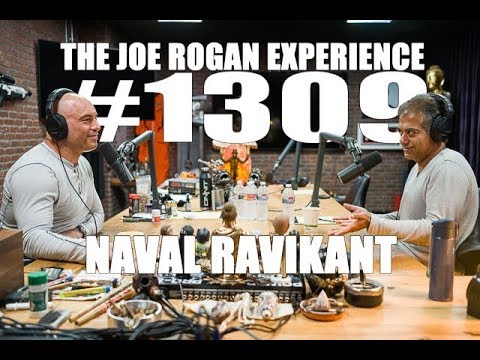
This is episode 1309 of the Joe Rogan Experience, two hours and twelve minutes long. Rogan introduces Ravikant as a big investor, deep in the tech world, who still seems to have a balanced perspective on how to live.
A bear on a unicycle
“It’s not balance,” Ravikant says, when Rogan uses the word. Then he says why people listen to him.
“If you go to a circus and you see a bear, that’s kind of interesting, but not that much. If you see a unicycle, that’s interesting. But you see a bear on a unicycle, that’s really interesting. So when you combine things you’re not supposed to combine, people get interested.”
Bruce Lee is his example, philosophy plus martial arts. “At some level all humans are broad, we’re all multivariate, but we get summarized in pithy ways in our lives, and at some deep level we know that’s not true.” He prefers the ancient model, where you go to school, then to war, then run a business, then serve in the senate, then become a philosopher. “As one of my friends says, specialization is for insects.”
The hard part is starting over. “If you find a mountain and you start climbing, you spend your whole life climbing it, and you get say two thirds of the way, and then you see the peak is way up there. But now to go the rest of the way you’re going to have to go back down to the bottom and look for another path. Nobody wants to do that.”
The people who manage it are the greatest artists and creators. Elon Musk gets called an idiot and starts over at something he is supposedly not qualified for. Madonna or Paul Simon or U2 release an album in a new style and their existing fans hate it, and a lot of the time they miss completely. “You have to be willing to be a fool and kind of have that beginner’s mind and go back to the beginning to start over. If you’re not doing that, you’re just getting older.”
Peaking has a cost, and he describes it later in the conversation. Once you are visible the inbound requests arrive: read a business plan, come to an event, talk to a friend. “You’re just being assaulted all the time with inbound opportunities, so you have no time to start over with anything. You have to ruthlessly disappoint everybody. Eliminate and clear your schedule, drop all the meetings, not even respond to the emails.”
Rogan says the appeal for him is simply getting better at things. Ravikant is more specific about what he is chasing. “I live for the aha moment, that moment when you connect two things together that you hadn’t connected before, and it kind of helps form a steel framework of understanding in your mind that you can then hang other ideas off of.”
How he reads
Rogan says he was fascinated by how Ravikant reads, because he does the same thing and assumed something was wrong with him. Ravikant picks up a book, drops it, picks up another.
The habit comes from childhood. “I was raised by a single mom in New York, and she used the local library as a daycare center because it was a very tough neighborhood. She would basically say, when you get back from school go straight to the library and don’t come out until I pick you up late at night.”
So he emptied it. “I used to basically live in the library and I read everything. Every magazine, every book, every map. I just ran out of stuff to read.”
What survived is an allergy to book counting. “I got over this idea that reading a large number of books or reading a book to completion is a vanity metric, because when people are putting up photos of look at my pile of books, it’s a show-off thing, it’s a signaling thing.” He would rather reread the best hundred books than read all of them. “Your brain has finite information in a finite space. You get enough advice, it all cancels to zero.”
He keeps 50 or 70 books open at once on a Kindle, bouncing between them, and he does not accept that this makes him distractible. “You can view that as a negative and be like, I have no attention span. Or you could view that as a positive: I multitask really well and I can dig really fast. If I find a thread that’s interesting I can follow it through five social networks, through the web, through the libraries, through the books, and I can really get to the bottom of this thing very quickly. It’s like the library of Alexandria that I can research at my disposal.”
The same instinct runs through his view of education. Knowing calculus will not help you today; knowing arithmetic cold will. Can you rebuild the thing from scratch? He points to a passage of Richard Feynman’s that runs from counting on your fingers to calculus in four pages, unbroken. “He didn’t have to memorize anything. When you’re memorizing, it’s an indication that you don’t understand. You should be able to rederive anything on the spot, and if you can’t, you don’t know it.”
He has a warning about people who sound smart, who use a lot of jargon and whose reasoning you cannot quite follow: “You have this deep down suspicion they don’t even really understand.” He includes his younger self. “I always wanted to seem like the smartest kid in the room. So what did I do? I read a lot of books, I memorized a lot of things, and then whatever I hadn’t memorized, this is pre-Google, I made it up so it sounded good. After Google, fact-checking started and I had to get better.”
Writing is his fix. “There are gaps in thinking where you make leaps because you’re kind to yourself that you don’t realize you’re making. But when you’re forced to write it down, and this is why I tweet, or when you have to talk to somebody, you have to complete those gaps and make it a proper logical chain.”
Rogan’s version of the same complaint is about compression. “Don’t give me the lecture, give me the book. Don’t give me the book, give me the blog post. Don’t give me the blog post, give me the tweet. Don’t give me the tweet, I already know.”
Signaling, and being rich and anonymous
Rogan brings up the curated version of life people post, “displaying the best aspects of your life in some sort of a glass case,” and says he is as guilty as anybody. Ravikant agrees and offers his own tell: he poses with his dog every time he runs.
“Rather than really looking at yourself, you’re looking at how other people look at you,” he says. “It’s kind of a disease, because social media is making celebrities of all of us, and celebrities are the most miserable people in the world. There’s this strong self-image that gets built up by compliments. And then one idiot comes along, one out of a hundred, and they can easily tear it down, because it doesn’t take many insults to cancel out a lot of compliments.”
He quotes one of his own tweets, which he says are all reminders to himself: “You want to be rich and anonymous, not poor and famous.”
Rogan gives the concrete version. People walk up while he is holding his daughter, while she is crying. “Some bro will come over and just immediately have to take a picture. Doesn’t care. His needs supersede the daughter.” His wife used to think that was simply the price of being famous, and has stopped thinking so.
Ravikant is unsentimental about it. “Anonymity is a privilege. On the other hand, it’s self-inflicted. We brought it on ourselves.” Rogan owns the trade: some days he resents being approached, some days he is grateful. “I worked for this, I got this, this is the payoff.” Then Rogan turns it around and calls him a hero among investors. Ravikant corrects him. “I’m a hero among young male geeks, which, those are some of my favorite people.”
The tweetstorm he refuses to charge for
Ravikant’s small podcast exists to explain a tweetstorm. He wrote “How to Get Rich Without Getting Lucky” as 36 to 38 tweets, admits the title was clickbait, and says the content is timeless principles of wealth creation. They are older than the tweets. “These were principles that I came up with for myself when I was really young, around 13, 14, and I’ve been carrying them in my head for 30 years.”
There are more than three things everybody wants, he says, but three is where he starts: wealthy, happy, fit. “I know there’s a lot of virtue signaling that goes on, like we don’t want the money and happiness is for stupid people. But let’s face it, that’s the trifecta.” He drops fitness on the grounds that Rogan and his past guests know far more about it. The other two he claims by experience. “I was born poor and miserable, and I’m now pretty well off and I’m very happy, and I worked at those.”
None of it is for sale. “Everything that I’ve ever created on this topic of how to make money I will never charge a dollar for, because that would ruin it. That would show that I’m just another huckster trying to get rich off of you. There are no get-rich-quick schemes.”
He sets the limits himself, before anyone else can. “At the end of the day I can’t really teach anything. I can only inspire you and maybe give you a few hooks.” And arriving is not the whole job. “You don’t want to be the guy who succeeds in life while being high strung, high stress and unhappy, and leaving a trail of emotional wreckage with your loved ones. You want to be the guy or the gal who gets there calmly, quietly, without struggle. You want to be the calmest coolest cucumber in the room, who still also figures out the correct answer.”
Desire is a contract you make with yourself to be unhappy
Rogan asks about the claim that you can teach yourself to be happy, partly by announcing it. Ravikant says the mechanism is social consistency: humans need to stay consistent with their past pronouncements. He started his first company that way, telling everyone at a larger organization he was leaving, then feeling the months pile up. “Six months pass, nine months pass, then people start, you’re still here? Are you lying?”
Quitting drinking works the same way. “If you’re not serious about it you’ll say I’m going to cut back, I’m going to have only one drink a night. But if you’re serious you’ll announce it on Facebook, you’ll tell all your friends, you’ll tell your wife, you’ll say I’m done drinking, I’m throwing everything out of the house. When you say that, you know you’re serious.”
He raises the caveat before Rogan can. Some people are chemically depressed and he is not calling that a personal failure. But happiness belongs with the things people already accept as trainable. “Just like fitness can be a choice, health can be a choice, nutrition can be a choice, working hard and making money can be a choice, happiness is also a choice.”
Then he tightens the word. “Happy is one of those words that means a zillion different things. It’s like love. What does that mean? I love cheese.” His definition runs through desire, credited to Buddhism rather than himself. “Desire is a contract that you make with yourself to be unhappy until you get what you want.”
Desire itself is not the enemy. You are a biological creature and you have a mission. The problem is volume. “My coffee is too cold, doesn’t taste quite right, I’m not sitting perfectly, my dog pooped in the lawn.” So he rations them, one at a time. “Pick your one overwhelming desire. It’s okay to suffer over that one. But on all the others you want to let them go, so you can be calm and peaceful and relaxed, and then you’ll perform a better job.”
There is a consolation clever people reach for, and he mocks it. “Smart people aren’t happy. That’s a great little way for people to feel better about it.” He flips it. “If you’re smart you should be able to figure out how to be happy, otherwise you’re not that smart. If you’re so smart, how come you aren’t happy? That’s my challenge to all the people who think they’re so smart and so capable.”
Rogan pushes back that some people genuinely take pleasure in being miserable. Ravikant does not accept the trade, though he understands the trap. “If you’re smart it’s usually because you thought things through and you have a very busy mind. A busy mind can often rob you of peace of mind, because the peace that we seek is not peace of mind, it’s peace from mind.” Every wild thing people do for happiness is a way out of their own head. “You’re trying to get your monkey mind to stop chattering at you for a moment.”
Why a calm mind makes better decisions
“How good of an athlete are you going to be if you’re always having epileptic seizures, if you’re always twitching and running around and jumping and your limbs are flailing out of control? The same way, if you want to be effective in business you need a clear, calm, cool, collected mind.”
Warren Buffett is the example, a man who plays bridge all day and walks in the sun instead of loading his brain with non-stop information. Rogan objects that Buffett drinks something like six Coca-Colas a day and eats mostly McDonald’s and is somehow still alive. They land on low stress doing more work than the diet. “If you need your glass of red wine to de-stress and calm down, that’s probably better than you flying off the rails.”
He has a claim about why this matters now more than it used to. “We live in an age of infinite leverage. Your actions can be multiplied a thousand fold, either by broadcasting a podcast or by investing capital or by having people work for you or by writing code. Because of that, the impacts of good decision making are much higher than they used to be.”
He also rejects the idea that effort and output are proportional. “The guy running the corner grocery store is working just as hard or harder than you and me. How much output is he getting? What you do, who you do it with, how you do it, way more important than how hard you work.”
“You and I are not like cows, we’re not meant to graze all day. We’re meant to hunt like lions.” Train, sprint, rest, reassess, go again. “Machines should be working nine to five. Humans are not meant to work nine to five.” Rogan points out that people with bosses do not get that choice.
You’re not going to get rich renting out your time
That objection is where the tweetstorm actually starts. “You’re not going to get rich renting out your time. Even lawyers and doctors who are charging three, four, 500 an hour, they’re not getting rich, because their lifestyle is slowly ramping up along with their income and they’re not saving enough.”
“You have to own a piece of a business. You need to have equity, either as an owner, an investor, shareholder, or a brand that you’re building that accrues to you.”
The highest-return version is an individual brand. “The most powerful money makers are actually individual brands, people like yourself or Elon or Kanye or Oprah or Trump.” Rogan is the worked example: specific knowledge, accountability because his name is on it, leverage through media. “The podcasts work for you when you sleep.”
Nor could anyone else assemble the same skill set. “Who else is a UFC fighter and a commentator and a podcaster and a comedian?” Rogan interrupts to say he never fought in the UFC. Ravikant takes the correction and keeps going. “I could make you start over tomorrow, wipe out your bank account, you’d be rich again in no time, because you have all the skill sets.”
“If Joe Rogan were to disappear off the air tomorrow, it’s not like random podcaster number 12 would step in and fill that thing. No, it’s just gone. So the way to get out of that competition trap is actually to be authentic. The way to retire is to find the thing that you know how to do better than anybody, and you know how to do it better than anybody because you love to do it.”
Retirement is when today is complete in itself
Rogan raises the treadmill. A nice Chevrolet becomes a BMW becomes a Mercedes becomes a Ferrari. How do you get off?
Mostly you cannot, at first. “You have to buy your stupid car to realize that it doesn’t attract attractive girls. It actually just attracts other dudes who are like, hey I like that car man.” Rogan, who owns several, says his are not for that. “I’m married. Those are for me, I just enjoy machines.”
“Lack of material possessions can make you very unhappy, so being poor can make you unhappy. But being rich is not going to make you happy. And what happens, unfortunately, a lot of people struggle through their whole lives to make money, they make some, they’re exhausted, and then they’re like, well now why am I not happy? I guess I’m just not a happy person.”
What people staring at a mansion and a watch actually want is not the objects. “What you really want is freedom. You want freedom from your money problems.”
So he redefines the word. Not sixty-five and a nursing home and a check. “Retirement is when you stop sacrificing today for some imaginary tomorrow. When today is complete in and of itself, you’re retired.” Three routes get you there: passive income covering a deliberately low burn rate, driving the burn rate to zero and becoming a monk, or doing something you love so much the money stops being the point.
Ravikant cites Nassim Taleb, who says the two great addictions are heroin and a monthly salary, and adds the peer problem: plenty of people who feel poor where they live would be rich in Thailand or Bali if their job travelled. “Envy makes the world go around.”
“Anything you wanted in your life, whether it was a car or a girl or money, when you got it, a year later you were back to zero. Your brain had hedonically adapted to it and you were looking for the next thing.”
An aspirational hourly rate, and no more meetings
“No one’s going to pay me more than what I think I’m worth. So what am I worth?” He picked a number and defended it, starting at 500 dollars an hour and later upgrading to 5,000. “Pick an aspirational hourly rate. Aspirational, it has to be a little ludicrous.”
Then he applies it mechanically. If a return trip is worth less than the rate, he throws the item away. If a task can be hired out below the rate, he hires it out. Fun, rest, leisure, friends and family are exempt. “If you’re doing anything you don’t want to do, which is the definition of work, it better be for your hourly rate.”
Meetings fail badly. “The cost of meetings is so high, especially given all the people in there. One person is talking, seven people listening. You’re literally just dying an hour at a time.” He owned the domain idontdocoffee.com and used to reply from it, which he calls a bit of a jerk move. “Meetings should really be phone calls, phone calls should be emails, and emails should just be texts.”
Business travel was the worst offender, so he cut it out entirely. “About five years ago I resolved I am never going to travel for business. And I haven’t travelled for business since.” He travels only when the trip is worth it on its own terms. “I only want to do actions that are complete in and of themselves. If I’m looking for some ulterior motive down the line, it’s not going to materialize.”
The firm is getting smaller
Rogan asks about Ravikant’s view that in fifty or a hundred years virtually everyone will work for themselves, and that the information age will reverse the industrial age.
Ravikant starts before the factory. Hunter-gatherers worked for themselves inside cooperating tribes, and most farms stayed family-sized. Industrial work created the model of thousands of people on one thing, with bosses and schedules and times to show up. Freedom, for him, is not measured in net worth. “I don’t care how rich you are, I don’t care whether you’re a top Wall Street banker. If somebody can tell you when to be at work and what to wear and how to behave, you’re not a free person. You’re not actually rich.”
The economics come from Ronald Coase, whose theorem asks why a firm is the size it is. Building a house and needing lumber, do you bring that in-house or contract for it? “Information technology is making it easier and easier to do these transactions externally. I can send you small amounts of money, I can hire you through an app, I can rate you afterwards. So we’re seeing an atomization of the firm.” Silicon Valley is the visible version. “What looked like the small little vacation rental market on Craigslist is now suddenly blown up into Airbnb.”
He expects it to arrive at the high end rather than in driving jobs. “You’ll wake up in the morning, your phone will buzz, and you’ll have five different jobs from people who have worked with you in the past or have been referred. It’s kind of like how Hollywood already works.” Take the project or don’t, get paid, get rated, turn it off, go to Tahiti for three months.
He wants this against his own interest as an employer, telling his own employees he will help them start their own companies when they are ready. Rogan asks whether anyone has studied happiness against company size. “Not that I’m aware, but to me it’s obvious. The smaller the company, the happier you’re going to be.”
Universal basic income is a non-solution to a non-problem
Rogan brings up universal basic income and Andrew Yang, whom Rogan found compelling and who was running for president. Ravikant is not persuaded. “I think it’s a non-solution to a non-problem.”
Automation has been happening since the dawn of time. Electricity put out of work the people carrying buckets of water and lighting lamps, and Rogan adds the printing press. “What it does is it frees people up for new creative work. There is no finite number of jobs. We’re not sitting around dividing up the same jobs that have been around since the stone age.” New ones appear and nobody can predict them. “If I told you 10 years ago that podcaster was going to be a job, or that commentating on video games is going to be a job, you would have laughed me out of the room.”
He also says the apocalypse is not in the data. “We’re at a record low unemployment. Where’s the transition?” Rogan interjects that Donald Trump would take the credit. “All I’m saying is, I don’t see it in the numbers.”
Then the objections. First, politics. “You’re creating a slippery slide transfer straight into socialism. The moment people can start voting themselves money, combined with a democracy, it’s just a matter of time before the bottom 51 votes themselves everything in the top 49.” He adds a parenthetical: “By the way, slippery slope fallacy is not a fallacy, and I know people like saying that, but they haven’t thought it through.”
Second, arithmetic. “The estimate I saw for 15k a year basic income for everybody would be three quarters of current GDP, and of course GDP would shrink in response as all the entrepreneurs fled. So you would essentially bankrupt the country.”
Third, status, where he spends the most time. “People who are down on their luck, they’re not looking for handouts. It’s not just about money, it’s also about status, it’s about meaning. The moment I start giving money to you and put you on the dole, I’ve lowered your status, I’ve made you a second class citizen. So I have to give you meaning, and meaning comes through education and capability. You have to teach a man to fish, not throw your rotting leftover carcasses at him and say here, eat the scraps.”
Fourth, targeting. Handing 15k to everybody is nonsense when some people do not need it, and once you means test you are back to a welfare system deciding who qualifies. The number would not hold anyway. “Heck, if I was not working and I was getting my 15 a year, I would happily vote for the guy who would give me 20 or 25. It’s just common sense.”
He counters with two things instead. Provide subsistence in abundance through technology rather than cash: basic housing, basic food, basic transportation, high-speed internet, a phone. And kill the retraining myth. “One of the myths we have today is that adults can’t be re-educated. We view education as this thing where you go to school, you come out of college, and you’re done. Well, that’s wrong.” Instead of permanent income, a periodic sabbatical: every four or six or ten years, take a year out at public expense and retrain completely into any profession you like.
Coding is thinking
Ravikant knows he is on the unpopular side of this one. “People who are talking about AI automating programming have never really written serious code. Coding is thinking, it’s structured thinking. An AI that can program as well or better than humans is an AI that just took over the world. That’s end game. That’s the end of the human species.”
General AI is not coming, in his view. “We’re nowhere near close to general AI. Not in our lifetimes.” He reads the fear psychologically: “It’s a combination of a Cassandra complex, it’s fun to talk about the end of the world, combined with a god complex, like people who have lost religion so they’re looking for meaning in some kind of end of history.”
Today’s advances are narrow AI, pattern recognition and machine learning, with nothing approaching creative thinking. We do not know how the brain works, we have never modelled a paramecium or an amoeba, and the assumption that all the computation happens at the neuron level ignores what is inside the cell. “There’s a lot of machinery inside the cell that is doing calculations, that is intelligent, that isn’t accounted for. The best estimates are it would take 50 years of Moore’s law before we can simulate what’s going on inside a cell near perfectly, and probably 100 years before we can build a brain that can simulate inside the cells.”
He adds one more objection. “I would posit there’s no such thing as general intelligence. Every intelligence is contextual within the context of the environment that it’s in.”
Rogan pushes the thought experiment: a machine storing everything ever written and spoken, applying logic, improving on the patterns, acting on its own. Ravikant says storage is not the hard part. “Nature is parsimonious, so we’ve got this three pound wet wear object that can hold all this data.” And a mind with no body is fatal to the idea. “If you raised a human being in a concrete cell with no input from the outside, they wouldn’t have any feedback from the real world, they wouldn’t evolve properly. So just dumping information into a thing isn’t enough.”
Rogan raises chess, then Go, which he calls a giant shock. Ravikant does not budge. “These are still man-made, very closed, bounded games. They’re not on the road to the unbounded game of life. Being good at Go doesn’t mean that you can then suddenly figure out how to write great poetry.”
One thing he concedes. “Creativity is the last frontier. I do believe that automation over a long enough period of time will replace every non-creative job. But that’s great news. That means all of our basic needs are taken care of and what remains for us is to be creative, which is really what every human wants.”
Socialism comes from the heart, capitalism from the head
Rogan asks what he says to people who do not believe ethical capitalism exists, and concedes ground in the question itself: monopolies are a problem, crony capitalism is a problem, and the banks did real damage.
Ravikant picks up the last one. “They’ve essentially taken huge risks where they privatize the gains and they socialize the losses. So when it fails they basically get bailed out and bankrupt everybody else.” Then he defends the thing rather than the word. “Free markets and free exchange are intrinsic to humans, from when the first person started a fire and somebody came along with a deer and said, hey, if I cook my deer on your fire I’ll share some of it with you.”
The valid critique, in his telling, is narrow. “The correct criticism of capitalism is when it does not provide equal opportunity, and so we should always strive to provide equal opportunity. But people confuse that with equal outcome. When you have equal outcome, that can only be enforced through violence, because free people make different choices, and when they make different choices they have different outcomes.”
The part he actually wants to argue for is that the game is not zero sum. “It’s not like status, where you’re higher up, I’m lowered down, you’re president so I must be vice president, you’re a plus one, I’m a minus one and it has to cancel to zero. We should all be for playing positive sum ethical games.”
The overcorrection worries him more than the thing being corrected. “Because of these looters who have ruined capitalism’s name, you get socialists coming in and saying burn the whole system down. You burn the whole system down, we end up like Venezuela or the former Soviet Union. You don’t want to be a failed socialist state with emaciated teens hunting cats in the streets to eat. That’s literally what happens in some of these places.”
Rogan asks whether any socialist he has argued with has made a compelling case. “Socialism comes from the heart. We all want to be socialist. Capitalism comes from the head, because there are always cheaters in any system, and there are incentives in any system. When you’re young, if you’re not a socialist you have no heart. When you’re older, if you’re not a capitalist you have no head. You haven’t thought it through.”
He borrows a nested framing from Nassim Taleb. “With my family I’m a communist, with my close friends I’m a socialist, at my state level politics I’m a Democrat, at higher levels I’m a Republican, and at the federal level I’m a libertarian.” The bigger and less trusting the group, the better the incentives have to be. He offers a test for anyone who disagrees. “You want to be a real socialist? Great. Open all your doors and windows tomorrow, everybody come take what you want. See how that works out.”
On income inequality he wants the term restated. “Let’s flip it around. It comes from outcome inequality, and the outcome inequality is there because you made different choices.” Rogan’s version is that there is always effort inequality and thought inequality, that some people are simply obsessed, and that their success is not theft. On privilege he is impatient. “You know what the greatest privilege is? You’re alive. 85 percent of humanity is dead.”
Both think the racial version aims at the wrong target. Rogan grants the premise, that black Americans are more likely to be harassed by police or treated with suspicion by shop owners, and rejects the conclusion. “The problem isn’t the people who aren’t treated poorly, the problem is the people who treat the people poorly. The problem is racism.” Ravikant’s read on who is actually fighting is about class. “Mostly the people who are yelling racist are not the minorities. What’s mostly going on is elitist whites, blue state whites, college educated whites, beating up on high school educated whites, blue collar. It’s a white collar versus blue collar war that’s going on, and the rest of us are just kind of watching like, oh, that’s kind of interesting.”
Doxxing and the end of the neutral journalist
Ravikant starts from the upside, because he thinks the ability for anyone to broadcast is a net good. “If a totalitarian dictator were to come to power and someone had fascists beating up on old women, that would get broadcast out instantly. There would be an instant outrage and hue and cry.”
The cost is that mobs assemble just as fast. Rogan brings up a doctored video that made Nancy Pelosi look drunk, and what happened to the man who posted it. A publication tracked him down and doxxed him, and he turned out to be a day laborer and an African-American Trump fan who thought it would be funny. Rogan’s objection is that Facebook handed over his information.
“The media now views it as their job to go after individuals they don’t like.” He traces why. Before the internet you had two local papers and two local TV stations per town. Then CNN commoditized news with 24/7 broadcast, and the internet finished it. “News has become commoditized, so the entire news media has shifted into peddling opinions and entertainment.”
“These are now tribal propaganda machines signaling for their tribes. There’s a right-wing one, there’s a left-wing one, and the two of them are just fighting it out using their various media organs and memes. So when you see one of these news organizations doxxing an individual, that’s like a tank running over a soldier. It’s just war.” “The illusion of objectivity that journalism had is lost. There’s no longer one guy like a Walter Cronkite that everyone’s going to listen to.”
The internet produces one giant winner per category and a long tail of individuals, and kills the middle. Seven Hollywood studios become Netflix. Ten big retailers become Amazon plus a lot of small brands. “So this idea of who’s a journalist and who’s not, is Assange a journalist or not, everyone’s a journalist.”
On outrage he is blunt. “People who get easily outraged are the stupidest people on social media. Those are the people I block instantly.” He does not entirely blame them. “The human brain is not designed to absorb all of the world’s breaking news, 24/7 emergencies injected straight into your skull with clickbait headline news. If you pay attention to that stuff, even if you’re well-meaning, it will eventually drive you insane.” And someone engineered the addiction. “You have social statisticians and scientists and researchers and people in lab coats, literally best minds of our generation, figuring out how to addict you to the news.”
He also flags, mid-conversation, that this conversation is raw material. “I’m sure people will take out snippets, put them on social media and try and get somebody outraged.” Rogan offers an aphorism: if you want to see who rules over you, see who you are not allowed to criticize.
The people writing the algorithms
Asked how it plays out, Ravikant starts with where power actually sits. “The most powerful people in the world today are the people who are writing the algorithms for Twitter and Facebook and Instagram, because they’re controlling the spread of information. They’re literally rewriting people’s brains, they’re programming the culture, and they’re doing it very subtly.”
He points to a Google executive telling Congress the company does not manipulate search results. “That is literally all Google does. Google has one job, which is to manipulate search results, to pull them out of the noise and rank them properly. And the precise algorithms are very hidden, very complex, but influence the hearts and minds of everybody, including all the voters.”
The platforms made an error they cannot undo. Had they stayed neutral carriers, taking down only what a court ordered, they would have kept the phone company’s protection. Once they started removing legal content they lost it. “Now they’re sliding down the slippery slope into ruin, where the left wants them to take down the right, the right wants them to take down the left, and now they have no allies.”
Rogan asks whether regulation will force free speech principles on them. “Unfortunately it’s headed the opposite direction,” Ravikant says. He expects hearings and pressure instead. Rogan notes the legislators questioning Zuckerberg seemed completely incompetent, and Ravikant says competence is beside the point. “They’re just applying pressure, trying to scare him so he’ll do what they want. And what do they want him to do? They want him to suppress the other side.” Since the companies sit in Silicon Valley, enforcement will carry Silicon Valley’s politics. “It’s doublespeak. You call it the Department of Defense when it’s the Department of War. In this case the Department of Safety and Trust, when really it’s the Department of Censorship.”
He cites what he thinks is called Conquest’s law, that any organization not explicitly right-wing eventually becomes left-wing. “I don’t know why that’s true, but it does seem to me to be true.”
Rogan brings up Jack Dorsey, who told him free speech is a fundamental right and the platforms should work like utilities. He agrees with Dorsey and doubts Twitter. “Jack is correct and he has the right vision. It’s just he’s in an organization where the other individuals feel differently, very differently. So the organization itself can get hijacked.” Gab does not solve it either: closer to a free speech platform, but not decentralized, so it can still be shut down, and the population there is far enough right that a moderate has nowhere to stand. The same pressure exists where he works. “Now you have to pick sides, otherwise you’re automatically the enemy.”
“Whenever you suppress speech, the organism metastasizes. If you’re unlucky it goes towards violence. If you’re lucky they find other outlets. I think we will start creating decentralized media that’s not owned by any single entity, that can’t be suppressed or shut down.” Not quickly. “It’s going to take 10 years, 20 years.”
Technology pushes left, and the universities went first
“Technology is a force that also pushes left. If you look all throughout human history, the left essentially grows and grows and grows.”
Technology, he argues, dissolves the units the right is built on. The industrial revolution made people wards of the state. Contraception takes away from the family unit. Abortion is a technology that was not possible thousands of years ago. “Technology empowers the individual, and the individual means the breakdown of family structure and religion, and I’m mostly not opposed to that, but it does mean there’s a leftward shift.” A few cut the other way: encryption makes privacy and stateless money easier, and 3D-printed guns push right. “But generally technology leads the world left.”
He spends longer on the universities, and his account is that they borrowed their credibility. They earned authority from the hard sciences, because those delivered real things: the Manhattan Project, the microprocessor, space vehicles, the electric car. “So then come the social sciences, kind of sneak in. Then you get economics, and microeconomics is a real discipline, real math behind it. And then macroeconomics, which can be politicized, a little more voodoo. And then social studies, and then gender studies.” The naming gives it away. “You can tell they’re fake sciences because they have the word science tacked on at the end.”
“What you see going on today in the universities is a war between the social sciences and the physical sciences, and the crossover point is biology, where the whole gender is a social construct movement is attacking biology and evolutionary biology. Just like in the social sphere they’re coming after the comedians.”
He thinks the physical sciences are losing, while admitting reality gives them a floor. “At the end of the day your aircraft still has to fly, your microprocessor still has to compute, so there’s only so far they can take it.” The damage lands on biology. “A lot of biologists are facing this difficult thing where they have to say things that they know are not true to keep their job.” He points to Bret Weinstein, a previous guest of Rogan’s, as the visible case, guesses synthetic biology work will drift to China, and flags his own limits: “I don’t know enough here, so now I’m in shaky territory.”
Blank slate theory goes the same way, where you cannot say outcomes are mostly nature, or mostly nurture, without offending one side or the other. Rogan’s complaint is the cost to knowledge: what makes a person a sociopath or a drug addict are questions worth answering. “You can’t have a reasonable conversation about climate science anymore,” Ravikant says. “It’s not a science, it’s all politicized. You can’t even bring it up, everyone’s got their minds made up already.”
If you want to think clearly, stop paying attention to politics
Half the time people are not even arguing about the same thing. On guns, “one side is talking about the right to bear arms in case a tyrannical ruler tries to take over the country. The other side is talking about school shootings and protecting people in their homes from crime. They’re just talking about two different things.” Immigration is the same: the left bundles legal and illegal immigration into one word, and the right has racists hiding in the coalition, so neither side is answering the actual question of how many people to admit and on what criteria.
Rogan pushes on gun control, where the question gets narrowed on purpose: nobody gets to ask about mental health, or about how many shooters were on psychiatric medication. He calls mass SSRI prescription one of the greatest mental health experiments in history. Ravikant gives it the statistician’s version. If you give 30 million people SSRIs and 29.9 million are happier while a fraction commits suicide, “you’re basically trading the mean for the variance. You have blow-up risk.”
He blames the two-party lock on the voting system. Under first past the post a third party vote is a discarded vote, so beliefs have to fit one of two bundles, “and when you get into that tribe, if you signal outside of that bundle, you get attacked.” A friend of his is building a workaround called the Good Party, where you pool your vote in reserve and cast it only once there are enough to win.
What it costs you, in his account, is the ability to think. “If all of your beliefs line up into one political party, you’re not a clear thinker. If all your beliefs are the same as your neighbors and your friends, you’re not a clear thinker. Your beliefs are socialized, they’re taken from other people. So if you want to be a clear thinker, you cannot pay attention to politics. It will destroy your ability to think.”
He has one design test that would survive either tribe. “The test of any good system is you build a system, hand it over to your enemies to run for the next decade. If you want censorship on Twitter or Facebook, build that system and hand it over to the other side to run.”
The modern struggle is against everything built to addict you
“All our diseases are diseases of abundance, not diseases of scarcity. In old times I may have starved. If I got sugar, that was a wonderful thing, I should have eaten all the sugar I could get my hands on.”
Now the same inputs arrive without limit. “Social media, they’ve massaged all the mechanisms to addict you like a Skinner’s pigeon. The food, they’ve taken sugar and weaponized it. Drugs, they’ve taken pharmaceuticals and plants and synthesized them. Porn, if you’re a young male you wander on the internet, it’ll sap away your libido. Video games, another way to addict people.”
He does not blame capitalism, which he says he loves. What changed is that you now face it alone. “The ancient struggle used to be the tribal struggle. You had your tribe of friends and family, you had your religion, your country, your loyalty. At least you had meaning and support, but then you would struggle against other tribes. Modern life, everything’s become atomized, we stand alone. You live in your apartment alone, your parents don’t live nearby, your friends don’t live nearby, you don’t believe in religion anymore, you don’t believe in country anymore. It’s fine, you got a lot of freedom, it’s fantastic. But now when they come to attack you, you’re alone and you can’t resist.”
“The modern struggle as an individual is learning how to resist these things in the first place, drawing your own boundaries. And there’s no one there to help you.”
Rogan says that is terrifying, and that young people have nothing to go on. “Our generation is the transition generation. I think our kids will know how to handle it better.”
So he proposes a retreat. “The way to survive in modern society is to be an ascetic. There’s too much society everywhere you go. Society in your phone, society in your pocket, society in your ears. You’re being socialized right now by listening to this podcast. We’re programming you. Everyone’s trying to program everybody. The only solution is turn it off.”
The art of doing nothing
Ravikant quotes a line he attributes to Pascal, that all of man’s problems arise because he cannot sit by himself in a room for thirty minutes alone, and says it described him exactly. “I always needed to be stimulated, and when the iPhone came along, boredom was dead. Even if I’m standing in line I’m on my iPhone, and I thought it was great. When I was a kid I used to try and overclock my brain, be like, how many thoughts can I think at once? The answer is only one, but I would try, and I was proud of that. It’s a disease. It’s actually the road to misery. Now I look forward to solitary confinement. You leave me alone for a day, it’ll be like the happiest day I’ve had in a while. And that is a superpower that I think everybody can attain, the superpower of learning to be alone and enjoying it.”
Rogan meditates in whatever gaps appear, and had twenty minutes at the doctor’s office that morning.
Ravikant is blunt about meditation’s reputation. “It’s one of those things that everybody says they do but nobody actually does. It’s like not eating sugar. Everyone talks about how yeah, I don’t eat sugar, and then the dessert tray rolls around and everyone’s going for the cookies.” He has no patience for the headbands and the trip counting. “Really all it is is the art of doing nothing.”
“All you need to do for meditation is just sit down, close your eyes, comfortable position. Whatever happens, happens. If you think, you think. If you don’t think, you don’t think. Don’t put effort into it, don’t put effort against it.”
Rogan asks whether he concentrates on his breath. “Nothing. Nothing. You just sit. You just sit,” Ravikant says. “Every meditation technique is leading you to the same thing, which is just witnessing. Concentration is a technique to still your mind enough that you can then drop the object of concentration. So you could also just try going straight to the end game.”
Then he tells you what it costs. “The problem with what I’m talking about, which is not focusing on your breath, is you will have to listen to your mind for a long time. It’s not going to work unless you do at least an hour a day, and preferably at least 60 days. So it’ll be hell for a while.”
He has a model for why. Everything unprocessed is sitting there, “all these preferences and judgments and unresolved situations, and it’s like your email inbox, just piling up email after email that’s not answered, going back 10, 20, 30, 40 years. And then when you sit down to meditate those emails start coming back at you.”
Most people quit exactly there and conclude it is not working. “It’s self therapy. Instead of paying a therapist to sit there and listen to you, you’re listening to yourself, and you just have to sit there as those emails go through one by one until you get to the magical inbox zero. And there comes a day when you sit down and realize the only things you’re thinking about are things that happened yesterday, because you’ve processed everything else. Not necessarily even resolved it, but at least listened to yourself. That’s when meditation starts.”
Rogan asks what the ultimate state is. Bliss, harmony, enlightenment? “It’s kind of indescribable, because when you’re really meditating you’re not there. When there’s no thoughts there’s no experience, there’s nothing, there’s just nothing.” He has hit the states people chase with psychedelics and does not treat them as the point. “I’ve had trippy visuals, I’ve had the lights and colors, I’ve had the so-called downloads, I’ve had the realizations, I’ve had the bliss. But not every time.” The states themselves become a craving that takes you out of meditation, and he disclaims the category: “I’m not enlightened or anything close to it, not even the ballpark.”
The state he actually wants is quieter than any of that. “The place where I end up the most, that is really the one I want to be at, is peace. It’s just peace. Peace is happiness at rest, and happiness is peace in motion. You can convert peace to happiness anytime you want, but peace is what you want most of the time. If you’re a peaceful person, anything you do will be a happy activity.”
He adds one exclusion. “By the way, being on social media, engaging in politics, will not bring you peace. There is nothing less peaceful.” And he rejects the standard route, since external problems are unlimited. “The only way to actually get peace is on the inside.” Rogan agrees.
Buy the rainforest, build the green technology
Ravikant’s example of changing yourself is a man he met in New Zealand running a two-week zero-waste experiment, keeping and cleaning every package, composting the leaves out of his tea bags and reusing the bags as tiny storage. “He was literally living with zero trash waste, and it was really inspirational. Meeting people like him made me far more environmentally conscious than any amount of people yelling at me on social media ever will.” Rogan’s reaction is that the man sounds like a hoarder with a collection of tea bags.
“The modern environmental movement identifies the correct problem, which is finite earth, spaceship earth, this is all we’ve got, don’t ruin it. But they don’t have the solution. So what they say is no growth, no growth, no growth. Well, the problem is you’ve got three billion Indians and Chinese who aren’t going to stay in poverty. They’re going to grow whether you like it or not.”
So make the clean option the cheap one. “You have to build green technology,” he says, giving Elon Musk credit for being one of the few people trying, and noting that Tesla gives away its patents.
Sell health, he says, not guilt. “Chinese want to be healthier, Indians want to be healthier. If you say I can clean up your rivers, I can have your children not get sick with cholera and diphtheria and typhoid, I can give you clean drinking water, that is what causes people to become environmentalists. Not shouting and screaming at them that they shouldn’t grow.” Straws are too small an example to carry it. San Francisco can ban them; China will not, until someone builds a paper straw at the same cost and durability.
For problems markets do not reach, like the Amazon, he proposes buying them. “You’re sitting here in your comfortable chair on social media hammering away at the evil Brazilians for deforesting the Amazon. But the Amazon has incredible resources. If we really care about it we should turn it into an incredible tourist park and put your money where your mouth is.” He extends it to pharmaceutical rights: sell the future rights to plant medicines from a patch of rainforest so a company has a financial reason to preserve the biodiversity on it.
Rogan sees immediate pushback from people who do not want a pharmaceutical company owning a natural plant. Ravikant floats a government-auctioned version, then concedes the shape of it. “Often there is no really good solution. There’s a bunch of solutions that also have drawbacks. That’s life.” He is open about the bias. “I skew more towards private property capitalist type solutions, because even though they’re not perfect, they have been proven to actually work. Once something is your property you take care of it.” With one amendment: “It should probably be temporary property, not permanent property.”
Energy gets the same treatment. He wants nuclear back in development and thinks the regulatory reaction to accidents killed the learning curve. “Imagine if when the first steam engine blew up we said, no more steam engines. You can’t innovate that way. When the first airplane crashed, we said no more innovation in airplanes?” Gen 4 reactors already fail safe. “When they fail, they fail into a state where there’s no leakage, there’s no problem. Their default is a positive outcome, as opposed to the old ones.” And Gen 4 is not the end of the line. “They’re not Gen 5, they’re not Gen 80, Gen 100, where we’re at in microprocessors.” He would run the tests off-planet. “We should be building nuclear fusion test plants on the moon. The moon should be littered with them. There’s no downside.” Rogan asks how you get the power home. You do not, at first: you use it there, to launch satellites and rockets further out, and only later does the technology come home.
Agrippa’s trilemma
The test he applied to mathematics, that you should be able to rederive anything or you do not know it, he also turned on the meaning of life. A few months before the interview he went down a rabbit hole on the meaning of life. He calls the topic trite, something you ask your parents when you are young and they tell you not to worry about it, or to go get a job, or here is God. What he wanted was not the answer but the shape of a possible answer. “I have to establish for myself what it could and could not be, and that gave me some level of peace.”
The structure has a name. Any chain of why questions ends in one of three places: infinite regress, circular reasoning, or an axiom. That is Agrippa’s trilemma, which he says he thought through first and then googled.
He spends his time on the third exit. “The most popular axiom is God, but it could be anything. Because of math, because of science, because of the big bang, because of the simulation. Saying we’re in a simulation, or saying it’s the big bang, is just another way of saying God. It’s just that God’s a dirty word so we don’t use it as much anymore.”
The good news, he concludes, is that there is no answer. “If there was a single answer, we would not be free. We would be trapped, because then we would all have to live to that answer, and we’d be bored like robots, each one competing to fulfil that single meaning more than the others. But luckily there is no answer, so you just do whatever you want.”
Rogan takes it to scale: multiverse, galaxies, planet, organism, cells, parasites, and where a person fits in any of it. Ravikant answers with a paradox. “No two points are the same. No one will have your thoughts, your emotions, your feelings, your experience. So your life is a single player game.”
Then the other side of it. “I cannot say the word Joe Rogan without invoking the entire universe. An alien comes along, says what’s that? Joe Rogan. What’s Joe Rogan? A human. What’s a human? Bipedal ape. What’s an ape? On the earth. What’s the earth? Planet. Where was the carbon made? Inside stars. I have to create the entire universe just to say the words Joe Rogan.”
So the answer to whether you matter is both. “I am nothing and I am everything.” Chasing the questions produces paradoxes rather than answers, which he thinks is fine. “The act of pursuing them is really useful, because it gives you a certain intrinsic understanding that brings a level of peace.”
“There’s a big difference between not knowing what the meaning of life is, and, I have to get out of this job, I can’t live my life this way. Which is why I always start with, let’s get you rich first.” Money now buys what you used to have to give everything up for. In the old days you became a monk and gave everything up to be free inside. “Today we have this wonderful invention called money, where you can just store stuff up in a bank account. Then you can live well below your means, and that will give you the time and the energy to pursue your own internal peace.”
He thinks everyone can get there, because the game is not zero sum. “Everybody can be wealthy. It’s not a zero-sum game, it is a positive sum game. You create something brand new, you exchange it with me for something brand new, I’ve created higher utility for both of us.”
Rogan asks whether that is even possible at scale. Ravikant answers with a thought exercise. “Imagine if tomorrow we could wave a wand and everybody was trained as a scientist or an engineer. Even if you weren’t very good, you had enough understanding of computers, you could write some code, you could build some hardware.” He preempts the objection. “Don’t tell me people can’t do it, because they can. That’s just the tyranny of soft expectations. That’s just you looking down on somebody else.”
“We would all be done within five years. Robots would be doing everything from cleaning toilets to cooking food to flying airplanes to driving Ubers. And what would we be doing? We would be doing all creative jobs to entertain each other and researching science and technology. So it is really just a question of education, nothing else.” Asked whether it scales past 300 million people, he says the number is irrelevant. “It’ll work with 10 billion people, it’ll work with a spacefaring race with 100 trillion people. One asteroid’s got all the minerals we need. One solar system has got all the power we will need for a long, long time.”
Four hundred dollars, and the habit of sounding smart
Rogan raises the standard objection. “That’s easy for you to say.”
Ravikant calls it a terrible trap and answers with the resume. “I grew up as a first generation immigrant in Jamaica, Queens, with zero money, single mom, two kids, working day and night going to school. I washed dishes, I was working catering jobs, I was mowing lawns, I was working since the age of 11. Didn’t have two cents to rub together.” The number he remembers is small. “I had to borrow 400 to go to college. Literally, I was short 400 dollars.” He also got rejected for a job at Dunkin’ Donuts.
“It’s actually really hard. It is the hardest thing you will do. But it’s also the rewarding thing. Look at the kids who are born rich. No meaning to their lives.” Then the harder version. “Your real resume is just a cataloguing of all your suffering. If I were to ask you to describe your real life to yourself when you look back on your deathbed, it’s all going to be around the sacrifices that you made and the hard things that you did. Anything you’re given doesn’t matter.”
He is unsympathetic to the alternative explanation. “Victim mentality. It’s somebody else’s fault, it’s my skin color’s fault, it’s the system’s fault. Those people are sinking. I feel bad for them, I want to shake them out of it.”
He turns it around to what judging costs the person doing it. “The more you judge the more you’re going to separate yourself. You’ll feel good for an instant, because you’ll feel good about yourself, I’m better than that. But then you’re going to feel lonely, and you’re just going to see negativity everywhere. The world just reflects your own feelings back at you.”
Rogan asks how he got happy, and when. Not the money. “I was miserable, I’m happy as a clam,” he says. “I got there before the money,” dating the shift to about eight years, gradual and still going. “I’m very happy these days, deliriously so. It’s actually hard for me to hang out with normal people.”
Two lines did the work. One is Confucius: “Every man has two lives, and the second starts when he realizes he has just one.” Rogan calls it a mic drop. The other is about desire: “A happy person wants 10,000 things. A sick person just wants one thing.”
He tried everything. “I even tried an SSRI just to see what it would feel like.” Rogan asks how it felt. “It turned me from a pessimist to an optimist, but I didn’t like the physical side effects, nor did I want to be on a drug for a sustained basis, so I dropped it.”
What worked was slower. He forced the positive reading of every event until it stopped requiring force. A friend of his wife’s dumped hundreds of photos on his phone, and his first reaction was irritation. His second was that she had given him hundreds of photos and he could pick the one he liked. “There are two ways of seeing almost everything. There are a few things that are high suffering, so you can’t do that other than saying, well, this is a teacher. But I slowly worked through every negative judgment that I had until I saw the positive, and now it’s second nature.”
There is a mechanical reason it works. “Happy thoughts disappear automatically, very easy to let go of them. Negative thoughts linger. So if you interpret everything positively very quickly, you let it go much faster.” The rest of the list is plain: more sunlight, smiling more, hugging more, time in nature. He has a second, looser definition of meditation to go with it. “Meditation is not a sit down, close your eyes activity. Meditation is just basically watching your own thoughts like you would watch anything else in the outside world, and saying, why am I having that thought? Does that serve me anymore? Is that conditioning from when I was 10 years old?”
That is how he caught himself rehearsing. His mind ran for days before this podcast, imagining himself saying every thought to Rogan, then rehearsing telling Rogan about the rehearsal. He worked backwards to the cause. “When I was a kid in Queens and I had no money and I needed to save myself, the way I got out was by sounding smart. Not being smart. Sounding smart. That was the skill I perfected, so I am hardwired to always rehearse things so I will sound smart. It’s a disease. It keeps me from being happy.”
Seeing it was enough to loosen it. “When you understand something, then it naturally calms you down. So after that I stopped rehearsing as much. But it’s still a trained habit.” The test he runs on himself now: “Would I still be interested in learning this thing if I couldn’t ever tell anybody about it? That’s how I know it’s real.”
He turns it into consolation. “You’re a winner now in your life, you were a loser at some point. If you had gotten all the girls, if you had all the money, if you were good looking in junior high or high school, you wouldn’t have done anything with your life and you would have peaked early. It’s like the Bruce Springsteen ‘Glory Days’ song. You would have married your high school sweetheart, you’d be living in your hometown, you’d be a manager at the local McDonald’s. Thank god we didn’t all get what we wanted when we were young.”
Playing sixteen hours a day
Rogan asks what lights his fire now.
“Art,” Ravikant says. “Art is just creativity. It’s just anything that’s done for its own sake. There’s nothing beyond loving somebody, creating something, playing.” Business counts, on his terms. “To me creating business is play. I create businesses early stage because it’s fun, because I’m into the product. Even when I invest, it’s because I like the people, I learn from them, and I think the product is really cool.” Which means he passes on good investments because the product bores him.
He calls that a luxury. “When I was younger I used to be so desperate to make money that I would have done anything. If you’d shown up and said, I’ve got a sewage trucking business and you’re going to go into that, I’d have said great, let’s do it. Thank god no one gave me that opportunity.” He treats it as a direction, not a switch. “These are not 100 or zero things. You can in your life start moving more and more towards that. But that’s a goal.”
He ends on what the work feels like from the inside. “That’s what I always say when people say I work hard. Sort of, not really. I’m always working, but it looks like work to them and it feels like play to me. And that’s how I know no one can compete with me on it, because I’m just playing 16 hours a day. And if they want to compete with me and they’re going to work, they’re going to lose, because they’re not going to do it 16 hours a day, seven days a week.”
Rogan hopes people pull things out of the conversation and apply them, and asks where to find him. Twitter, Ravikant says, at @naval.


